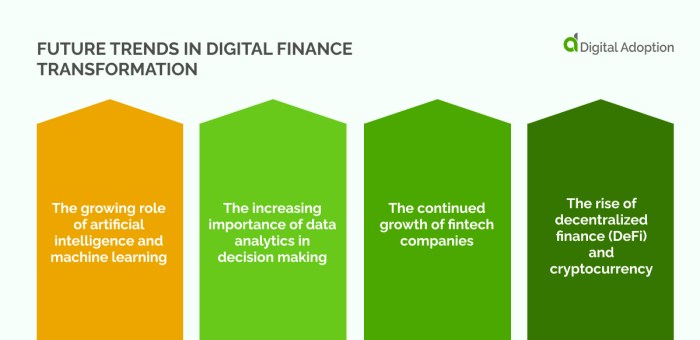
Digital transformation in finance strategy is reshaping the landscape of financial services, driving efficiency and innovation. As organizations adapt to this technological shift, understanding the core principles and components becomes essential for success. With a well-defined strategy, finance professionals can harness emerging technologies to enhance their operations and meet evolving customer expectations.
This transformation is not just about adopting new tools; it’s about redefining how finance departments operate and contribute to overall business goals. By embracing technology, finance leaders can streamline processes, improve decision-making, and ultimately drive better financial outcomes.
Digital Transformation in Finance Strategy
Digital transformation is redefining the way financial institutions operate, shifting from traditional frameworks to technology-driven models. This evolution is not merely about replacing old systems with new ones, but about embracing a holistic change that integrates technology, processes, and people. As such, having a well-defined finance strategy becomes crucial during this transformation, ensuring alignment between technological advancements and overall business objectives.The significance of a robust finance strategy during digital transformation lies in its ability to guide organizations through complex changes while optimizing resources and enhancing operational efficiencies.
Key components that contribute to a successful digital transformation in finance include:
- Data Analytics: Utilizing advanced analytics to gain insights into customer behavior and market trends.
- Cloud Computing: Implementing cloud-based solutions for scalability and flexibility.
- Automation: Streamlining processes through automation to improve accuracy and reduce manual intervention.
- Cybersecurity: Ensuring robust security measures to protect sensitive financial data.
- Customer Engagement: Leveraging technology to enhance customer experiences and engagement.
Role of Finance Professionals
In the era of digital transformation, finance professionals play a pivotal role in navigating the complexities of integrating technology into financial practices. They are not just number crunchers anymore; their responsibilities have expanded to include strategic decision-making, risk management, and technology implementation.To thrive in this evolving landscape, finance professionals need to develop a diverse set of skills that encompass both financial acumen and technological expertise.
Essential skills include:
- Data Analysis: Ability to interpret and analyze large datasets.
- Technological Proficiency: Familiarity with financial software and tools.
- Soft Skills: Strong communication and collaboration abilities to work effectively with cross-functional teams.
- Adaptability: Willingness to learn and adapt to new technologies and methodologies.
By embracing these skills, finance specialists can effectively adapt to the trends of digital transformation, positioning themselves as valuable assets to their organizations.
Impact of Finance Technology
The rapid advancement of finance technology is a driving force behind transformative strategies in the finance sector. Technologies such as artificial intelligence (AI), blockchain, and machine learning are revolutionizing how financial institutions operate. These innovations enable more efficient processes, enhanced customer service, and improved risk management.For instance, many finance companies have adopted AI-driven chatbots to streamline customer service, resulting in faster response times and increased customer satisfaction.
The implementation of blockchain technology has also improved transaction transparency and security, significantly reducing the risk of fraud.To effectively implement finance technology within an organization, a strategic framework is essential. This framework should include:
- Assessment: Evaluate current technological capabilities and identify areas for improvement.
- Planning: Develop a roadmap for technology integration aligned with business goals.
- Execution: Implement the technology gradually, ensuring proper training for staff.
- Evaluation: Continuously monitor and assess the effectiveness of the technology.
Finance Licenses and Regulations
In the context of digital transformation, finance licenses play a critical role in ensuring compliance and maintaining trust within the financial system. Regulatory frameworks are designed to protect consumers and uphold the integrity of financial markets, making it essential for companies to understand and adhere to these regulations.Regulations directly impact digital strategies adopted by finance companies, as they must navigate compliance while innovating.
Key finance licenses that professionals should be aware of include:
- Certified Public Accountant (CPA): Essential for accountants offering auditing and tax services.
- Chartered Financial Analyst (CFA): Recognized credential for investment professionals.
- Certified Financial Planner (CFP): Important for those in financial planning and advisory roles.
- Anti-Money Laundering (AML) Compliance: Critical for entities involved in financial transactions.
Finance Division and Structure
Digital transformation significantly influences the structure of finance divisions within organizations. Traditional finance organizational structures often consist of siloed departments with distinct roles, which can create barriers to collaboration. In contrast, digitally transformed finance divisions prioritize agile, cross-functional teams that facilitate faster decision-making and innovation.When comparing traditional structures to those adapted for digital transformation, several differences emerge:
- Integration: Increased collaboration across departments to leverage technology and data.
- Flexibility: Ability to quickly adapt to changes in the market or regulatory environment.
- Focus on Innovation: Encouraging a culture that values experimentation and new ideas.
Best practices for reorganizing finance teams to support digital initiatives include fostering a culture of continuous learning, investing in technology training, and promoting open communication among team members.
Role of Financial Statements
Financial statements serve as vital tools for measuring success during digital transformation initiatives. They provide a clear picture of an organization’s financial health and operational efficiency, enabling stakeholders to make informed decisions.Key metrics that finance teams should focus on post-transformation include:
- Return on Investment (ROI): Assessing the profitability of technology investments.
- Cost Efficiency: Analyzing operational costs to identify potential savings through automation.
- Customer Acquisition Costs (CAC): Evaluating the effectiveness of marketing strategies in attracting new clients.
To assess the effectiveness of digital strategies, finance teams can utilize methods such as variance analysis and benchmarking against industry standards, ensuring that the organization remains competitive.
Finance Transformation vs. Digital Transformation
Finance transformation and digital transformation are interconnected yet distinct concepts. While finance transformation focuses on optimizing financial processes and practices, digital transformation encompasses a broader spectrum of organizational change driven by technology.Organizations can integrate finance transformation into their broader digital strategy by aligning financial objectives with overall business goals, ensuring that financial practices support technological innovations.The synergies between finance transformation and other organizational changes include enhanced data sharing, improved customer experiences, and streamlined operations, ultimately driving business growth and competitive advantage.
Finance Minister’s Perspective
The role of government and finance ministers is crucial in promoting digital transformation within the finance sector. They influence policies that can either facilitate or hinder technological advancements, shaping the landscape in which financial institutions operate.Policies that may impact digital transformation strategies include regulations around data protection, tax incentives for technology investments, and funding for fintech innovations. Initiatives that finance ministers can implement to enhance financial innovation include:
- Supporting Research and Development: Encouraging investments in fintech startups and innovation hubs.
- Streamlining Regulations: Creating a conducive regulatory environment that fosters innovation while ensuring compliance.
- Promoting Financial Literacy: Implementing programs to educate the public about digital financial services.
Future of Finance Jobs
The landscape of finance jobs is rapidly evolving due to digital transformation, with traditional roles adapting to incorporate new technologies and methodologies. Emerging roles within finance companies now focus on data analysis, technology management, and strategic decision-making.New job titles that have gained traction include Data Analyst, Fintech Specialist, and Risk Management Consultant. These roles emphasize the integration of technology with financial expertise.To future-proof their careers, finance professionals should focus on:
- Continuous Learning: Staying updated with the latest technological advancements and industry trends.
- Networking: Building connections within the fintech ecosystem to explore new opportunities.
- Skill Diversification: Acquiring skills in data science, cybersecurity, and digital marketing.
Summary

In conclusion, the journey of digital transformation in finance strategy is both challenging and rewarding. As the financial landscape continues to evolve, staying ahead of technological advancements will be crucial for finance professionals and organizations alike. By focusing on strategic integration of technology, financial leaders can position themselves for success and unlock new opportunities in the digital age.
User Queries
What is digital transformation in finance?
It refers to the integration of digital technology into all areas of finance, fundamentally changing how businesses operate and deliver value to their customers.
Why is a finance strategy important during digital transformation?
A well-defined finance strategy helps organizations align their technological initiatives with business objectives, ensuring that investments in digital tools deliver tangible benefits.
What new roles are emerging in finance due to digital transformation?
Roles such as data analysts, financial technologists, and digital compliance specialists are becoming increasingly important as companies integrate technology in their operations.
How do regulations affect digital transformation in finance?
Regulations can shape the implementation of technology in finance, often requiring adherence to compliance standards that influence how digital strategies are developed and executed.
What skills should finance professionals develop for the future?
Skills in data analytics, cybersecurity, digital strategy, and technological proficiency are essential for finance professionals looking to thrive in a digitally transformed environment.


